Close Search
RIWE
Menu
  • Home
  • About Us
  • Leadership
  • News
  • Research
  • Contact
  • facebook linkedin
  • Donate

Ethics and Research Policy
Gender Equity Plan
Safeguarding and Protection Policy
Strategic Framework and ToC
© 2026 Refugees International Women Empowerment (R.I.W.E.). All rights reserved.
Transparency Register
Bulgaria Registry
Privacy and Data Protection Policy

Close Menu
Donate
  • Home
  • About Us
  • Leadership
  • News
  • Research
  • Contact
  • facebook
  • linkedin

July 2026

The European Commission has just proposed extending Temporary Protection for Ukrainian refugees until March 2028. We welcome this.
But one more year is not a solution. It is a postponement.
The extension buys time. It does not create the binding transition framework that four million Ukrainians — the vast majority of them women and children — actually need.
Without a binding EU-level instrument, protection after 2028 will again be determined by Member State discretion. And we already know what that looks like: Germany, November 2025. Poland, 2026. The pattern is reduction, not consolidation.
Council of Europe Commissioner for Human Rights Michael O’Flaherty said it clearly: countries must ensure protection “for as long as necessary” and must refrain from policies that push Ukrainians toward return before it is genuinely safe. No region of Ukraine is unambiguously safe. Civilian casualties from Russian strikes in recent months are the highest since 2022.
R.I.W.E. Foundation and partner organisations have published a Joint Statement to the European Commission and the Council of the EU. Our research — an anonymous survey of 454 Ukrainian displaced women in Bulgaria — shows:
— 66% expect the end of Temporary Protection to increase their exposure to exploitation
— Only 3.5% would contact an NGO or helpline if something went wrong
— 25% explicitly distrust institutions
— 24% have encountered suspicious online recruitment
The extension gives us one more year to get this right. We are calling on the EU to use that year to adopt a binding transition instrument — with guaranteed continuity of healthcare, housing, education, and employment, anti-trafficking protections, and firewalls that protect women who report violations.
Children who have spent years in EU schools, who carry the weight of war, have a right to stability that transcends any administrative deadline.
Sign the statement. Share it. One year is not enough time to waste.

October 2026

The Sarajevo Pledge was initiated through the joint programme Women Lead the Way towards Peace and Security in Bosnia and Herzegovina, led by UN Women Bosnia and Herzegovina and jointly implemented with IOM Bosnia and Herzegovina and UNFPA Bosnia and Herzegovina in partnership with the Ministry for Human Rights and Refugees of Bosnia and Herzegovina, with support from the UN Secretary-General’s Peacebuilding Fund #PBF UN Peacebuilding and Peace Support.

Sarajevo Pledge is an outcome of the Sarajevo WPS event in June which was co-funded by the ECARO’s Lead4Peace regional programme “Women’s Increased Leadership for Resilient and Peaceful Societies” funded by the Ministry of Foreign Affairs of Denmark.

October 2026

This is timely and important paper. Its core message that “no one size fits all” and that all transition pathways are needed is exactly right.

BUT observation from Bulgaria: the country does not appear in the analysis at all. Yet Bulgaria hosts a large Ukrainian population, mostly women and children, and is already facing the questions this paper raises: what happens after temporary protection, how work-conditioned statuses will work, and how access to asylum and long-term residence will be secured.

This is not only a Bulgarian gap. It reflects a wider problem: countries with less visible policy debate and less research attention risk being left out of comparative European assessments, just when national transition rules are being designed. Without that evidence, the human rights safeguards the paper recommends (parallel pathways, clear information for beneficiaries, protection of vulnerable groups, mobility between employers, recognition of years of residence) are harder to promote at national level.

From our work in Varna with Ukrainian women under temporary protection, we see how much a Bulgaria-specific assessment would matter. We would be glad to contribute to, or support, such an analysis, and would welcome contact with the authors and the Council of Europe Division on Migration and Refugees.

Temporary protection lasts until 4 March 2028. What happens after that? **
Bulgaria has no clear answer to this question yet. That is exactly why we need to start preparing it now.
Temporary protection status does not by itself create an automatic right to stay once the regime ends. Those who want to stay in Bulgaria will need other legal grounds and a clear transition mechanism.
Today, over 80,000 Ukrainians are in Bulgaria, including almost 24,000 children. The children go to school, their parents work, people rent homes, pay taxes and are already part of local communities.
But what will happen to them after 4 March 2028? So far there is no clear national mechanism for moving from temporary protection to other legal statuses.
According to a R.I.W.E. survey of 454 Ukrainian women in Bulgaria, 66% believe that the risk of exploitation may grow once temporary protection ends.
On 13 October the European Committee of the Regions also called on states and regions to start preparing the transition from temporary protection to durable solutions now, giving people legal certainty and a real choice between integration in the host country and safe, voluntary return.
**R.I.W.E. proposes a practical solution: set up an inter-agency working group under the National Assembly of Bulgaria.**
It should include: the State Agency for Refugees, the Ministry of Interior, the Ministry of Labour and Social Policy, the Ministry of Education, the Ombudsman, UNHCR, municipalities, Ukrainian communities and civil society.
The group’s tasks should be concrete:
— identify the possible legal pathways for people after temporary protection ends;
— collect reliable official data on Ukrainians living in Bulgaria;
— assess the needs of children, working families, vulnerable groups and people who have already integrated;
— prepare a national transition plan for the period after 4 March 2028.
This is not only for Ukrainians. It is in Bulgaria’s own interest: legal certainty instead of chaos, legal employment instead of a shadow economy, planning instead of last-minute crisis decisions. 2028 seems far away. But less than a year and a half remains until 4 March 2028, and for public policy that is a very short time.

We are pleased to announce that we have joined the Ukraine Policy Network, led by the University of Birmingham.

The network connects organisations, researchers and policy advocates working to address the challenges faced by displaced Ukrainians. Its priorities include pathways to settlement, employment and skills, and mental health and well-being.

We look forward to contributing to knowledge-sharing, collaboration and the development of evidence-based policy recommendations that strengthen support for Ukrainians.

R.I.W.E. Foundation
Sometimes the impact of human rights work appears quietly — in a few words added to a legal provision.
On 11 June 2026, Latvia amended the rules governing data recorded in the Court Information System (TIS).
Previously, Section 8.3.5 of Cabinet Regulation No. 618 referred, for a specific hearing, simply to:
“tiesnesi” — the judge.
It now reads:
“tiesnesi (arī nereferējošos tiesnešus)” — the judge, including non-reporting judges.
Why does this matter?
In one of the cases followed through human rights advocacy and legal work, a basic question proved remarkably difficult to answer:
Who exactly sat on the judicial panel, when did its composition change, and on what legal basis?
Article 6 of the European Convention on Human Rights protects the right to a tribunal established by law. This concerns not only the existence of the court, but also the composition of the judicial panel in the individual case.
Yet a judge may be replaced, another added, and the composition changed repeatedly without a clear individual record. Instead, a party may receive a general administrative order or a post-factum explanation: illness, training, leave, transfer or another reason.
The practical message becomes:
There may be no individual document — but trust us, the panel was lawful.
The rule of law cannot function on trust alone.
On 30 April 2026, the Latvian Ombudsman noted that certain changes in court composition are not always recorded in a separate procedural decision, although parties may request information from the court president.
But there is a fundamental difference between:
“Here is the decision by which the composition was changed.”
and:
“Ask the court president and you may receive an explanation.”
The first creates a verifiable legal record. The second is a post-factum explanation.
This is where human rights defenders and civil society have a role: to keep asking:
Where is the document? Who made the decision? When and on what legal basis? Where was the change recorded?
Importantly, we are not claiming that our advocacy caused the Latvian amendment. The legislative process began earlier, and establishing causation would require examining its drafting history.
But the timing and substance are noteworthy: the framework was clarified precisely around the practical issue raised by the case — how the composition of a specific hearing, including non-reporting judges, is recorded.
For R.I.W.E., this illustrates why independent human rights work matters.
It is not only about one person or one case. It is about challenging the point where institutional routine replaces verifiable legality.
Sometimes the result is a judgment. Sometimes a change in practice.
And sometimes it is simply a few words in a regulation.
But those few words can make a right more real, transparent and verifiable.
“Show me the document. On what legal basis did you do this?”
And the answer can no longer simply be:
“Trust us.”

October 2026

WHEN ONE VOICE IS NOT HEARD, WE BRING THE VOICES TOGETHER.
Most human rights violations never become court cases.
Many never even reach the police.
People may face discrimination, threats, administrative barriers, problems at borders, in public institutions or in accessing protection — yet never file a formal complaint.
Sometimes they do not know the language or the procedure. Sometimes they cannot afford legal assistance. Sometimes they are afraid. And sometimes they simply do not have the strength to spend months or years fighting a system.
As a result, many real problems remain outside official statistics.
This is where civil society matters.
At R.I.W.E., we bring together what may appear invisible when seen only as individual stories.
We listen.
We document.
We compare cases.
We preserve evidence.
We communicate with national authorities and European institutions.
And we ask an essential question:
Is this an isolated incident — or evidence of a systemic problem?
One case may look like an exception.
Ten similar cases raise questions.
Repeated patterns require institutional attention.
European institutions cannot be present in every police station, municipality, refugee centre, border crossing or courtroom. Civil society helps connect what happens to individuals on the ground with the institutions capable of changing policy, law and practice.
A government report may say: “the mechanism works.”
Civil society can add another part of the picture:
Here are the cases.
Here are the documents.
Here are the repeated responses.
Here are the consequences for people.
And here is the gap that official statistics may not reveal.
NGOs do not replace governments, courts, police, ombuds institutions or European bodies.
Our role is different:
to make sure that real problems do not disappear somewhere between the individual and the system.
For many people, R.I.W.E. becomes the channel through which a private experience can become documented evidence, a recurring pattern can become visible, and a voice that was not heard locally can reach the European level. We cannot promise that every problem will be solved. But we can work to ensure that it is seen, documented and heard.

September 2026

On 9 September, R.I.W.E. submitted a Rule 9.2 communication to the Committee of Ministers of the Council of Europe concerning the execution of the judgment in M.A. v. Latvia (Application No. 55234/21).
What interested R.I.W.E. is not only the circumstances of one individual case.
It is a broader rule-of-law question:
What happens when legislation does not clearly determine who must act, under which procedure, within what timeframe, and how authorities must coordinate when different legal proceedings overlap?
When these answers are missing, a person may formally have rights — and even a court decision in their favour — but still lack an effective mechanism capable of making those rights real.
This is a question of legal certainty, effective judicial protection and the practical effectiveness of human rights.
Latvia has asked the Committee of Ministers to close supervision of the judgment. R.I.W.E. therefore considers that the Government should explain.

July 2026

Another important step in our advocacy work.

We have received an official response from the Office of the Council of Europe Commissioner for Human Rights, Michael O’Flaherty, European Commission. The letter confirms that our submission regarding the rise of anti-Ukrainian rhetoric and hate speech in Bulgaria has been brought to the attention of the Commissioner.

The response also refers to the Commissioner’s recent official statement, in which he expresses concern about the growing hostility and hate speech directed at Ukrainians displaced by the war. He calls on European states to effectively combat discrimination and hate speech, strengthen protection mechanisms, and safeguard the rights and dignity of people under temporary protection.

Together with the recent response from the Representation of the European Commission in Bulgaria, confirming that our submission has been forwarded to DG JUST, DG HOME and the European Union Agency for Fundamental Rights (FRA), this demonstrates that the issues we have raised are receiving the attention of key European institutions.

We thank the European institutions for their attention to this issue and will continue working to protect the rights of Ukrainian women and all Ukrainians living across Europe.

July 2026

The official response from the European Commission Representation in Bulgaria regarding our submission on the rights and protection of displaced Ukrainian women.

The Representation has informed us that our letter has been forwarded to the Directorate-General for Justice and Consumers (DG JUST), the Directorate-General for Migration and Home Affairs (DG HOME), and the European Union Agency for Fundamental Rights (FRA).

We thank the European Commission for taking this issue seriously and look forward to further dialogue.
European Commission European Union Agency for Asylum – EUAA European Women’s Lobby R.I.W.E. (Refugees International Women Empowerment) Foundation European Commission against Racism and Intolerance (ECRI) OSCE Office for Democratic Institutions and Human Rights (ODIHR).

July 2026

The Bulgarian State Agency for National Security (SANS) has officially forwarded the submission of the R.I.W.E. Foundation to the Secretary General of the Ministry of Interior for further action within its competence.

Our submission concerns the growing wave of hate speech, online posts and comments calling for violence against Ukrainian citizens, and requests preventive measures to protect public order.
This is an important procedural step confirming that the issue has been officially registered and is being addressed by the competent Bulgarian authorities.

R.I.W.E. Foundation will continue working to protect human rights, the dignity and safety of displaced Ukrainian women, and everyone affected by discrimination and hate speech.

June 2026

R.I.W.E. Foundation R.I.W.E. (Refugees International Women Empowerment) Foundation has officially become a member of the Bulgarian Platform of the European Women’s Lobby.
This membership marks an important step in strengthening our engagement with national and European networks working to advance women’s rights, gender equality, social inclusion, and human rights.

At R.I.W.E., we work at the intersection of women’s rights, migration, anti-trafficking, gender-based violence prevention, and the protection of displaced and refugee women. Since 2022, we have been actively supporting Ukrainian women and children under temporary protection in Bulgaria while advocating for inclusive policies, equal access to rights and services, and protection from discrimination and hate speech.

Joining the Bulgarian Platform of the European Women’s Lobby creates new opportunities for collaboration, policy dialogue, and collective advocacy at both national and European levels. We look forward to contributing our expertise and field experience while learning from and partnering with fellow organisations committed to advancing gender equality and women’s empowerment.

Ivanna Khodos presented her speech in European Parliament.

Special thanks to Violetta Dvornikiva and European Association of Ukrainian Women to give two speeches and one panel moderation in International Women’s Leadership Forum &Awards.

The speech is available on LinkedIn

The Chair of the European Association of Ukrainian Women (EAUW), forum initiator Violetta Dvornikova, described the forum as a platform for dialogue between Ukrainian women working both in Ukraine and abroad.

Violetta Dvornikova joined the event online from Brussels

“In times of war, such events carry special importance, as they help keep Ukraine at the center of international attention and foster new partnerships,” she noted. As a concrete example of the economic presence of Ukrainians in Europe, Violetta Dvornikova cited data showing that in Poland, 8% of businesses opened over the past two years were established by Ukrainian sole proprietors.

Overall, approximately two million adult Ukrainian women are currently living in Europe under temporary protection status. This statistic was presented by Ivanna Khodos, EAUW representative in Bulgaria and founder of the Refugees International Women Empowerment Foundation (R.I.W.E.).

According to her, most Ukrainian women have been residing in their host countries for more than a year, while a significant proportion has lived there for over three years. More than 80% of them have higher education, and nearly half of the families have already made long-term decisions regarding their children’s educational pathways in a specific EU country. She emphasized that this reality must be clearly communicated to European societies.

“This is not about people entering European society — these are people who are already part of it,” Ivanna Khodos stressed.

She also drew attention to the fact that the annual extension of temporary protection without a long-term status creates a state of uncertainty that makes long-term planning and investment impossible.

More on LinkedIn

May 2026

These days in Brussels, we are speaking not only about supporting Ukraine, but also about the role Ukrainian women already play in strengthening and shaping Europe’s future.

It was an honor for Ivanna Khodos to moderate the panel and open the forum together with international experts, human rights advocates, and women leaders.

Our discussion focused not on abstract slogans, but on concrete challenges and policy solutions:

  • the long-term status of Ukrainian women in the EU after the Temporary Protection Directive expires in 2027;
  • recognition of Ukrainian qualifications and access to professions;
  • integration of Ukrainian children into local educational systems;
  • risks of violence, human trafficking, and unequal protection standards for women across EU member states;
  • the transition from formal inclusion to real economic and political agency for Ukrainian women in Europe.

Today, around 1.9 million adult Ukrainian women remain under temporary protection across the European Union. Most of them are highly educated, professionally experienced, and already contributing to the economies of EU member states.

Ukrainian women today are not only a humanitarian topic. They are already part of Europe’s economic, civic, and democratic architecture.

We also discussed the fact that the main barriers to integration are not a lack of motivation, but structural obstacles: temporary legal status, slow recognition of diplomas, difficulties integrating children into schools, and unequal access to protection mechanisms.

Yesterday, during the gala evening dedicated to the 3rd anniversary of EAUW, we were proud to present a special award to our colleague from R.I.W.E., Irina Mirochnik — an outstanding representative and top expert of the women’s movement in Europe.

During these days, together with colleagues, we are also discussing the creation of a unified Ukrainian women’s political lobby and the development of future international joint initiatives.

Today, directly from Brussels, Ivanna joined the Kyiv Inform press conference as a speaker. My sincere thanks to Violetta Dvornikova and EAUW for the invitation and support.

It was also a pleasure to meet Ms. Nadiia Leshchyk during the panel dedicated to education and anti-bullying initiatives. We worked side by side from the very first days of the creation of the Office of the Educational Ombudsman of Ukraine, and this issue remains deeply important today.

We also actively raising this issue in Bulgaria and would welcome stronger cooperation between Oleksandr Tyshchenko, Representative of the Ombudsman’s Office of Ukraine in Bulgaria, and the Office of the Educational Ombudsman of Ukraine.

More on LinkedIn

Svitlana Pomukchynska
Expert in Employment, Social Security and the Professional Integration of Ukrainians in Bulgaria

Svitlana Pomukchynska has 20 years of professional experience in employment, human capital development and social integration. For more than two decades her career was based in Odesa, Ukraine, where she held senior management positions. She was responsible for designing and implementing regional programmes for employment, for support to small and medium-sized enterprises, and for the social adaptation of internally displaced persons and veterans. Her work reached thousands of participants and more than 1,500 enterprises. She also built partnerships with 26 international and civil society organisations working in the Odesa region.

Her main area of expertise is developing methodological guidelines for Ukrainian citizens in the Republic of Bulgaria. The guidelines explain how insurance and employment records earned in Ukraine are recognised. She is the author of step-by-step guides, based on Bulgarian legislation and the Agreement between Ukraine and the Republic of Bulgaria on Social Security. The guides set out:

  • the procedure for confirming Ukrainian work experience in order to receive the salary supplement for length of service and professional experience;
  • the steps for registering with the Employment Agency and claiming unemployment benefit with Ukrainian insurance periods taken into account;
  • the required documents, the roles of the employer and public authorities, and what an employee can do if the claim is refused.

Her guidelines help Ukrainians under temporary protection in Bulgaria exercise their labour and social rights and receive full pay and social benefits.

Within R.I.W.E., Svitlana Pomukchynska provides expert support on labour rights, social security and the economic independence of refugee women.

Hawa Sturr
Communications Intern

Hawa Sturr is a senior at Bard College pursuing a BA in Political Studies, with an interest in European Union Law. She previously served as a Fellow at the Hannah Arendt Center for Politics and the Humanities. Through her work at the Hannah Arendt Center, she gained skills and experience in communications, programming leadership, and academic research.

Over the past few months, Hawa has worked on her senior thesis, a case study on the European Union’s genocide responses since its creation in 1950. She has invested time reading through the foundational treaties of the European Union, as well as the European Convention on Human Rights, which she believes to be the strongest piece of human rights legislation in the world, to understand the mechanics of the EU better as it relates to humanitarian crises. Hawa hopes to use the skills she learned as a fellow to support her growth in this internship.

Juliet Karimi
Volunteer

Juliet Karimi is an International Relations and Diplomacy professional with experience in research, programme support, data analysis, stakeholder engagement, and administration. Her background includes exposure to government and diplomatic work through the Ministry of Foreign Affairs, as well as experience in the private sector, where she has developed strong communication, organizational, and coordination skills.

She is passionate about international development, humanitarian affairs, refugee protection, peace and conflict, and initiatives that create meaningful opportunities for underserved communities. Juliet holds a Bachelor’s degree in International Relations and Diplomacy, with a focus on Peace and Conflict Resolution, and is committed to using her skills to contribute to impactful programmes and organizations working to create positive social change.

13 of May we had a highly productive discussion with the European Women’s Lobby, the largest umbrella network of women’s organizations in Europe. We sincerely thank Secretary General Mary Collins and Maya Doneva for an open, meaningful, and strategic conversation.

We discussed:

  • strengthening cooperation between Ukrainian and European women’s organizations;
  • the participation of Ukrainian women in shaping European policies;
  • the challenges faced by Ukrainian women due to war, forced displacement, and social vulnerability;
  • the importance of ensuring that the voices of Ukrainian women are represented at the European level.

Meetings like these are not only about partnerships. They are about a shared vision of a Europe that is united, fair, and inclusive — where women are not excluded from decision-making processes.

More joint work and cooperation ahead.

Today, Ivanna Khodos had the honour of speaking at the European Parliament teleconference Brussels–Kyiv.

1.91 million adult Ukrainian women are currently under temporary protection in the EU. Over four years. They are not a transit group — they are a resource that is already here.

Over 80% hold university degrees. They are already contributing to EU budgets — €446M net in Czechia in 2024 alone, 272,000 social contributors in Germany, 39,000 new businesses in Poland.

And yet: 60% work below their qualification level. Only half of Ukrainian children are enrolled in local schools. Protection expires in March 2027 — making long-term planning impossible.

Four barriers. Four actors. All instruments to remove them already exist in EU law.

The EU is spending €500M to attract researchers from outside — while 1.91 million highly educated women are already inside, waiting to be activated, not ignored.

Proud to have brought this to the European Parliament floor.

More on LinkedIn

Ivanna Khodos presented her speech in European Parliament.

Special thanks to Violetta Dvornikiva and European Association of Ukrainian Women to give two speeches and one panel moderation in International Women’s Leadership Forum &Awards.

The speech is available on LinkedIn

The Chair of the European Association of Ukrainian Women (EAUW), forum initiator Violetta Dvornikova, described the forum as a platform for dialogue between Ukrainian women working both in Ukraine and abroad.

Violetta Dvornikova joined the event online from Brussels

“In times of war, such events carry special importance, as they help keep Ukraine at the center of international attention and foster new partnerships,” she noted. As a concrete example of the economic presence of Ukrainians in Europe, Violetta Dvornikova cited data showing that in Poland, 8% of businesses opened over the past two years were established by Ukrainian sole proprietors.

Overall, approximately two million adult Ukrainian women are currently living in Europe under temporary protection status. This statistic was presented by Ivanna Khodos, EAUW representative in Bulgaria and founder of the Refugees International Women Empowerment Foundation (R.I.W.E.).

According to her, most Ukrainian women have been residing in their host countries for more than a year, while a significant proportion has lived there for over three years. More than 80% of them have higher education, and nearly half of the families have already made long-term decisions regarding their children’s educational pathways in a specific EU country. She emphasized that this reality must be clearly communicated to European societies.

“This is not about people entering European society — these are people who are already part of it,” Ivanna Khodos stressed.

She also drew attention to the fact that the annual extension of temporary protection without a long-term status creates a state of uncertainty that makes long-term planning and investment impossible.

More on LinkedIn

May 2026: These days in Brussels, we are speaking not only about supporting Ukraine, but also about the role Ukrainian women already play in strengthening and shaping Europe’s future.

It was an honor for Ivanna Khodos to moderate the panel and open the forum together with international experts, human rights advocates, and women leaders.

Our discussion focused not on abstract slogans, but on concrete challenges and policy solutions:

  • the long-term status of Ukrainian women in the EU after the Temporary Protection Directive expires in 2027;
  • recognition of Ukrainian qualifications and access to professions;
  • integration of Ukrainian children into local educational systems;
  • risks of violence, human trafficking, and unequal protection standards for women across EU member states;
  • the transition from formal inclusion to real economic and political agency for Ukrainian women in Europe.

Today, around 1.9 million adult Ukrainian women remain under temporary protection across the European Union. Most of them are highly educated, professionally experienced, and already contributing to the economies of EU member states.

Ukrainian women today are not only a humanitarian topic. They are already part of Europe’s economic, civic, and democratic architecture.

We also discussed the fact that the main barriers to integration are not a lack of motivation, but structural obstacles: temporary legal status, slow recognition of diplomas, difficulties integrating children into schools, and unequal access to protection mechanisms.

Yesterday, during the gala evening dedicated to the 3rd anniversary of EAUW, we were proud to present a special award to our colleague from R.I.W.E., Irina Mirochnik — an outstanding representative and top expert of the women’s movement in Europe.

During these days, together with colleagues, we are also discussing the creation of a unified Ukrainian women’s political lobby and the development of future international joint initiatives.

Today, directly from Brussels, Ivanna joined the Kyiv Inform press conference as a speaker. My sincere thanks to Violetta Dvornikova and EAUW for the invitation and support.

It was also a pleasure to meet Ms. Nadiia Leshchyk during the panel dedicated to education and anti-bullying initiatives. We worked side by side from the very first days of the creation of the Office of the Educational Ombudsman of Ukraine, and this issue remains deeply important today.

We also actively raising this issue in Bulgaria and would welcome stronger cooperation between Oleksandr Tyshchenko, Representative of the Ombudsman’s Office of Ukraine in Bulgaria, and the Office of the Educational Ombudsman of Ukraine.

More on LinkedIn

R.I.W.E. announces strategic partnership within an international consortium

Refugees International Women Empowerment Foundation (R.I.W.E., Bulgaria) is pleased to announce the launch of cooperation with Diplomatic Legal Hub in a consortium format aimed at implementing joint international initiatives.

 The partnership focuses on advancing work at the intersection of cultural diplomacy, human rights, migration policy, and support to Ukrainian communities across Europe.

A dedicated priority of this collaboration is strengthening the role of women, supporting vulnerable groups, and contributing to the development of new approaches for integrating war-affected experiences into European dialogue and policymaking.

This partnership represents not only an institutional step, but also a shared commitment to values that guide our work — trust, expertise, and meaningful international cooperation.

We express our appreciation to Diplomatic Legal Hub for the partnership and shared vision.

We believe that such collaborations contribute to shaping a more responsive, inclusive, and evidence-informed international agenda for Ukraine and beyond.

R.I.W.E. participated in Harvard Alumni GlobalWE event

R.I.W.E. participated in the 2026 Women’s Empowerment Expo organized by Harvard Alumni for Global Women’s Empowerment (GlobalWE). The Expo brought together organizations from around the world working on women’s empowerment, including areas such as health, education, freedom from violence, economic empowerment, and political rights. The event took place on April 18, 2026 (on campus in Boston) and April 25, 2026 (virtual). We appreciated this opportunity to engage with the Harvard community and to contribute to the global dialogue on women’s rights and empowerment.

Sound of Silence Project in Sofia and at the European Parliament in Brussels

On April 4 2026, our ‘Sound of Silence’ project was part of an intercultural dialogue (Death Across Cultures: Memory, Identity, Ritual) in Sofia that was dedicated to memory, loss, remembrance, and human practices of farewell.

The event, organised by Multi Kulti and Bistra Ivanova in partnership with our Refugees International Women Empowerment Foundation, with the support of Aleksandr Tishenko, Advisor to the Ukrainian Parliament Commissioner for Human Rights in Bulgaria, created a rare and meaningful space for reflection across cultures.

Representatives of India, Ukraine, Bulgaria, and Iran shared how their communities understand death, grief, remembrance, and the enduring relationship between the living and those who are no longer physically present.

We continued in Brussels on 22–23 April 2026, as part of the Ukrainian Civil Society Hub at the European Parliament, organised by R.I.W.E. together with the European Association of Ukrainian Women, Violetta Dvornikova and Ksenia Ulitovskaya.

This was not only an artistic presentation, but an important policy-focused conversation on migration, vulnerability, and the human cost behind displacement. Hosting such an initiative in this space is exceptionally rare, and we are deeply grateful to the European Association of Ukrainian Women for making it possible.

We sincerely thank all partners, contributors, and participants who stood with us. This is an important step toward bringing overlooked realities into European policy dialogue. For more information, click here.

From Sofia to Brussels, we continue building spaces where memory, dignity, and dialogue remain possible. For more information, click here.

* The Sound of Silence: Art, Forced Migration and the Price of Freedom is an exhibition by Ukrainian artist Fedir Alexandrovich, and dedicated to the memory of Ukrainian musician Yaroslav Kmytko (1997–2025). Created as both a tribute and a public reflection, the exhibition addresses the human cost of forced migration, social invisibility, isolation, and structural vulnerability experienced by displaced Ukrainians in Europe. Through visual art and public dialogue, the project invites audiences to reflect on what is lost when a person is displaced not only from home, but also from belonging, dignity, voice, and support.

“PolitA” Supports Report on the Situation of Ukrainian Refugees in Bulgaria

The Institute for Democracy and Development “PolitA” supports the analytical report on the situation of Ukrainian refugees in Bulgaria.

Further details are available here.

“Culture vs War” International Film Marathon

The international film marathon “Culture vs War”, organised by the Ukrainian association “Dyvys Ukrainske!”, is taking place across 21 countries and 64 cities, featuring 91 cultural events dedicated to the fourth anniversary of Russia’s full-scale invasion of Ukraine. The initiative brings Ukrainian cinema to international audiences not only as artistic expression but also as a voice of cultural identity, memory, and resistance. The programme includes films such as Shadows of Forgotten Ancestors (dir. Sergei Parajanov), You Are the Cosmos (dir. Pavlo Ostrikov), Culture vs War (dir. Kostiantyn Tarasov), Yasa (dir. Serhii Masloboishchykov), Family Album (dir. Maryna Tkachuk) and Palianytsia (dir. Yulia Bolshynska). Screenings are coordinated worldwide by Ukrainian cultural organisations, including the Refugees International Women Empowerment Foundation in Bulgaria, contributing to global cultural diplomacy and solidarity with Ukraine.

Further information available here.

R.I.W.E. participates in the 70th session of the Commission on the Status of Women

On the margins of the 70th session of the Commission on the Status of Women (CSW70), we (R.I.W.E. (Refugees International Women Empowerment) Foundation) convened a multi-stakeholder discussion on: “Addressing Vulnerability of Ukrainian Refugee Women and Girls to Trafficking and All Forms of Violence through Building Trust-Based Protection Models.”

The discussion brought together representatives of international organisations, national authorities, and refugee-led initiatives, including the OSCE, the Bulgarian National Commission for Combating Trafficking in Human Beings (NCCTHB), and the Office of the Ukrainian Parliament Commissioner for Human Rights.

Our conversation was grounded in evidence. We presented findings from R.I.W.E.’s recent #research on the situation of Ukrainian refugees in Bulgaria, highlighting a critical structural issue: Only 3.5% of Ukrainian women surveyed would turn to official institutions for help.

This is not a gap in services. It is a gap in trust.

The discussion allowed us to exchange insights with colleagues, validate emerging trends, and refine our understanding of the evolving risks related to trafficking and gender-based violence.

Special thanks to Tatiana Kotlyarenko for moderating the discussion, and to all co-panelists: Tetiana Rudenko, Ernesta Rousseva, Veronica Zeitlin, Oleksandr Tyshenko (Alex Luna), Violetta Dvornikova, Yuliya Dorokhova, Ella Lamakh , Julia Sachenko , Doreen Beatrice  and Iryna Kopanytsia for their informative and thought-provoking contributions.

As a follow-up, we are exploring the establishment of a small operational working group to:

— facilitate rapid exchange of information and expertise

— strengthen coordination across stakeholders

— continue regular evidence-based discussions with engaged partners

This is not about dialogue for the sake of dialogue. It is about rethinking and redesigning protection systems so they actually work.

Further information available here.

Materials available here.

Borjana Pervan

  • LinkedIn

Borjana Pervan serves as Chief Operating Officer and Deputy CEO of the World Heart Federation (WHF), where she oversees advocacy, communications, global health and science, and strategy. In this role, she leads efforts to unite more than 240 cardiovascular organizations worldwide around the shared vision of achieving heart health for everyone. Her work focuses on translating scientific evidence into policy action, strengthening health systems, and mobilizing partnerships that accelerate global progress against cardiovascular disease.

Borjana brings nearly twenty years of international leadership experience across global health, sustainability, and international development. At WHF, she has helped drive major initiatives, including World Heart Vision 2030 and global awareness campaigns that have reached more than two billion people, mobilizing partnerships, funding, and policy commitments for cardiovascular health.

Prior to joining WHF, Borjana held senior leadership roles at the International Cocoa Initiative, advancing child protection and responsible supply chains, and at the International Union for Conservation of Nature (IUCN), where she led global communications teams and strategies supporting environmental protection and sustainable development.

She began her career as a journalist in Bulgaria, reporting on current events and political and economic developments, and conducting an investigation into human trafficking. After moving to Geneva in 2002, she worked with the International Organization for Migration (IOM) on programs related to compensation for victims of forced and slave labour and later joined the UN’s water, climate, and weather agency. 

Through her role on the board of Refugees International Women Empowerment (RIWE), Borjana intends to support efforts to strengthen the voice, leadership, and economic opportunities of refugee women and to advance policies that translate their lived experience into sustainable solutions.

Screening of the iconic Ukrainian film “Shadows of Forgotten Ancestors”

On 26 February 2026, a screening of the iconic Ukrainian film “Shadows of Forgotten Ancestors”, directed by Сергій Параджанов, took place in Veliko Tarnovo at Hotel Arte with Bulgarian subtitles. The 1964 film, based on the novella by a Ukrainian writer, is widely considered one of the most significant works of Ukrainian cinema and is included among the 100 greatest Ukrainian films of all time. Its recent restoration preserved not only the technical quality of the film but also the original visual aesthetics, colour palette, and sound atmosphere that define Parajanov’s artistic style.

The screening was held as part of the international festival “Dyvys Ukrainske” and the global film marathon Culture vs War, marking the fourth anniversary of Russia’s full-scale invasion of Ukraine. The event became an important moment of dialogue between the Ukrainian and Bulgarian communities, bringing together audiences around themes of memory, cultural resilience, and the role of art during wartime.

Special thanks to Silvia Jordan and Lubo Markov for their warm hospitality and to Fedir Aleksandrovych for the meaningful discussion, as well as to Alex Luna, representative of the Advisor to the Ukrainian Parliament Commissioner for Human Rights in Bulgaria, for his support and presence.

Such initiatives strengthen connections between our communities.

Tsarevets Fortress Illuminated in Ukrainian Colors as Veliko Tarnovo Shows Solidarity

On 24 February, the historic Tsarevets Fortress in Veliko Tarnovo was illuminated in blue and yellow to mark the fourth anniversary of Russia’s full-scale invasion of Ukraine. The symbolic initiative served as a gesture of remembrance, solidarity, and continued support for the Ukrainian people.

RegNews.NET – Новини по всяко време

The idea was initiated by Aleksandr Tishenko, Advisor to the Ukrainian Parliament Commissioner for Human Rights in Bulgaria, with organisational support from Refugees International Women Empowerment Foundation (R.I.W.E.). The event was made possible with the assistance of Veliko Tarnovo Mayor Daniel Panov and the technical team behind the “Tsarevgrad Tarnov – Sound and Light” audiovisual spectacle.

Illuminated in the colors of the Ukrainian flag, one of Bulgaria’s most iconic historical landmarks became a powerful symbol of unity, freedom, and shared European values.

Other links

Facebook 1
Facebook 2
24 Chasa
Focus-News
Radio Velikotarnovo

Announcement of Cross-Border Cooperation

We are pleased to announce that R.I.W.E. have successfully established a partnership with CIVIC MOMENTUM Struga (North Macedonia).

This cooperation represents a significant step forward in strengthening regional collaboration between two neighboring countries. By working together, we aim to promote shared values, exchange expertise, and address common challenges through impactful initiatives that benefit our communities on both sides of the border.

The associations have agreed to jointly apply for cross-border grants that are related to the mission and vision of both associations, with a particular focus on Women’s leadership and empowerment, Gender-based violence (GBV) prevention, Cross-border cooperation and regional partnerships, Policy advocacy and community engagement etc.

We look forward to building strong and lasting results through this cross-border collaboration.

Memorandum of Cooperation Signed!

We are pleased to announce the signing of a Memorandum of Cooperation between R.I.W.E. Foundation and the European Association of Ukrainian Women, led by V.V. Dvornikova, at the Ukrainian Voices Refugee Committee in Brussels.

Through this partnership, we unite our efforts to:

  • Strengthen the rights and opportunities of Ukrainian women and children in forced migration
  • Develop women’s leadership and economic empowerment
  • Advocate for rights at the level of European institutions
  • Implement joint international, cultural, and research initiatives

We believe this is an important step toward building a stronger international platform supporting Ukrainian women — their voice, dignity, and future.

Thank you to Irina Kopanytsia and Inna Leonova for your dedicated support and assistance to Ukrainians across Europe.

Together we are building a space of strength, solidarity, and new opportunities for Ukrainian women in Europe.

R.I.W.E. Supports the Brussels’ Call

R.I.W.E. supports the Brussels’ Call: why legalisation/regulation of prostitution is not the answer.

The Brussels’ Call brings together organisations and policymakers opposing initiatives to legalise or regulate prostitution, stressing that such approaches reinforce systems of exploitation.

In our work and Rule 9.2 communications, we consistently observe the same structural problem: formal rights do not function without practical guarantees — effective victim identification, access to legal aid, proper investigation, and a real path to compensation.

Legalisation does not automatically translate into protection. It:

– expands demand and the commercial market,

– increases incentives for exploitation and trafficking,

– leaves vulnerable women without effective exit options and recovery support.

If the objective is human rights and equality, policy must focus on reducing demand, strengthening protection systems, and ensuring meaningful support — not legitimising the industry.

Analysis and Recommendations on Cross-border Child Return Proceedings

We submitted a Rule 9.2 communication to the Committee of Ministers of the Council of Europe regarding the execution of the ECtHR judgment in Osso v. Bulgaria (2023).

On 11 February 2026, R.I.W.E. – Refugees International Women Empowerment Foundation provided analysis and recommendations on how cross-border child return proceedings affect displaced families, particularly Ukrainian mothers and children living under EU Temporary Protection.

Our submission highlights a key reality: legal standards alone are not enough if courts lack complete information about displacement risks, legal status, and the practical ability of a parent to accompany a child. Language barriers, lack of early legal aid, and short procedural deadlines often create an access-to-justice gap.

We proposed concrete safeguards — including state-funded legal assistance, professional interpretation, stronger fact-verification, and clearer assessment of temporary protection status in Hague Convention proceedings.

We invite human rights actors, legal aid providers, and child-rights advocates across Europe to engage in strengthening fair, well-informed decision-making in cases shaped by war and displacement.

Oleksandra Alkhimovych

    Oleksandra Alkhimovych is the co-founder of APT, a Ukrainian agency focused on investment in human capital, and a lecturer at international business schools. She has extensive experience at the intersection of IT, education, and public administration. In the corporate sector, she has held key leadership roles in HR and management, including Managing Director of Luxoft Ukraine and Vice President of Talent Management at Miratech.

    Oleksandra has collaborated with the Cabinet of Ministers of Ukraine and served as a Strategic Development Expert at the Office for Investment Attraction. She studied at Harvard Business School and holds professional HR certifications, including Assoc CIPD from the Chartered Institute of Personnel and Development (London). She served as Academic Lead of the MA in Human Resources and Organization Development program at UCU Business School and currently teaches at the UCU Leadership Center.

    She is recognized among the Top 30 Most Influential Women in Ukraine, mentors social projects encouraging girls in STEM, and serves as an expert for the Ukrainian Veteran Fund under the Ministry of Veterans Affairs.

    Statement by R.I.W.E.

    Позиция на Фондация „Овластяване на жените бежанци в света” (R.I.W.E.)

    R.I.W.E. изразява дълбока загриженост във връзка с текущото разследване относно предполагаемото тайно заснемане и разпространение на интимни изображения на жени по време на козметични и лазерни процедури в България. Подобни действия представляват сериозно нарушение на достойнството, личното пространство и телесната неприкосновеност и могат да имат дългосрочни психосоциални последици за засегнатите.

    Отбелязваме, че става въпрос за активно наказателно разследване, по което вече са подадени над 100 сигнала. Към момента няма потвърдени данни относно националността на засегнатите лица, но украинските жени представляват значителна част от местната общност в Бургас и активно ползват услуги в сферата на красотата и естетиката. Обсъжданията в местни Telegram общности показват тревожност, объркване и страх сред жени, които може да се колебаят дали да подадат сигнал или да потърсят подкрепа. Общностно-базираното изследване на R.I.W.E. сред разселени украински жени в България показва устойчиво недоверие към местни неправителствени организации и държавни институции, което може да доведе до неподаване на сигнали и забавено взаимодействие с разследващите органи. В този контекст внимателната комуникация, ясната информация и изграждането на доверие са ключови, за да се гарантира, че всички потенциални пострадали ще се чувстват достатъчно сигурни да се обърнат към институциите.

    Въз основа на нашите наблюдения върху ситуацията на разселените украински жени в България подчертаваме необходимостта от прилагане на подход, чувствителен към пола и културния контекст, по време на разследването и процесите на подкрепа на пострадалите. Украинските жени, особено преживели война и принудително разселване, могат да носят повишена уязвимост, свързана с травма, социална изолация и зависимост от непознати услуги и среди. Разследвания, които не отчитат тези фактори, рискуват да доведат до допълнителна вреда и занижено докладване.

    R.I.W.E. призовава правоохранителните органи и всички компетентни институции да:

    – прилагат травма-информирани и чувствителни към пола практики при разследване;

    – осигурят ясна информация на украински и други релевантни езици;

    – си сътрудничат с граждански организации и бежански инициативи като доверени посредници;

    – гарантират защита на достойнството и конфиденциалността на всички засегнати жени, независимо от техния миграционен статут.

    Ние сме готови да предоставим експертиза, основана на работа с общности, изграждане на доверие и подход, ориентиран към преживелите насилие, с цел подкрепа на отговорна и етична реакция към тази чувствителна ситуация.

    ________________

    Statement by R.I.W.E. – Refugees International Women Empowerment Foundation

    R.I.W.E. expresses deep concern regarding the ongoing investigation into the alleged secret filming and distribution of intimate images of women during cosmetic and laser procedures in Bulgaria. Such acts constitute a serious violation of dignity, privacy, and bodily autonomy, and may have long-term psychosocial consequences for those affected.

    We note that this case concerns an active criminal investigation, with more than 100 complaints already filed. While there is currently no confirmed data regarding the nationality of those affected, Ukrainian women constitute a significant part of the local population in Burgas and actively use beauty and aesthetic services. Discussions emerging in local Telegram communities indicate anxiety, confusion, and fear among women who may hesitate to report or seek support. R.I.W.E.’s community-based research among displaced Ukrainian women in Bulgaria highlights a persistent lack of trust toward local NGOs and state institutions, which may contribute to underreporting and delayed engagement with investigative bodies. In this context, careful outreach, clear communication, and trust-building measures are essential to ensure that all potential victims feel safe to come forward.

    Based on our field observations among displaced Ukrainian women in Bulgaria, we emphasise the importance of applying gender-sensitive and culturally sensitive approaches throughout the investigation and victim-support process. Ukrainian women, especially those with experiences of war-related displacement, may carry heightened vulnerability linked to trauma, social isolation, and dependency on unfamiliar service environments. Investigative procedures that fail to recognise these factors risk further harm and underreporting.

    R.I.W.E. therefore calls on law-enforcement bodies and relevant institutions to:

    – ensure trauma-informed, gender-responsive investigative practices;

    – provide clear information in Ukrainian and other relevant languages;

    – cooperate with civil society and refugee-led organisations as trusted intermediaries;

    – safeguard the dignity and confidentiality of all women affected, regardless of migration status.

    We stand ready to contribute expertise grounded in community-based research, trust-building practices, and survivor-centred advocacy to support responsible and ethical responses to this sensitive situation.

    #Bulgaria #Burgas 

    Fedir Aleksandrovych

      Fedir Aleksandrovych is a visual artist, curator, and scenographer whose work operates at the intersection of contemporary art, civic engagement, and critical reflection on history and power. Working with film-based practices, mixed media, and spatial research, his projects address memory, post-Soviet space, architecture, and political narratives, with a strong focus on art as a tool for public dialogue and social responsibility.

      Fedir’s artistic practice is deeply connected to questions of historical trauma, collective memory, and the long-term consequences of political and technological systems. His solo exhibitions include Shadow of Chernobyl at Hirvitalo / Pispala Contemporary Art Center (Finland, 2024), Three Years of February at Linavicius Art Foundation (Vilnius, 2025), Visit to Minotaur at the Institute of Contemporary Art Problems (Kyiv, 2021), and Singing Fields at Live Worms Gallery (San Francisco, 2016). Through exhibitions, installations, and film-based works, he seeks to create spaces for reflection, discussion, and civic awareness.

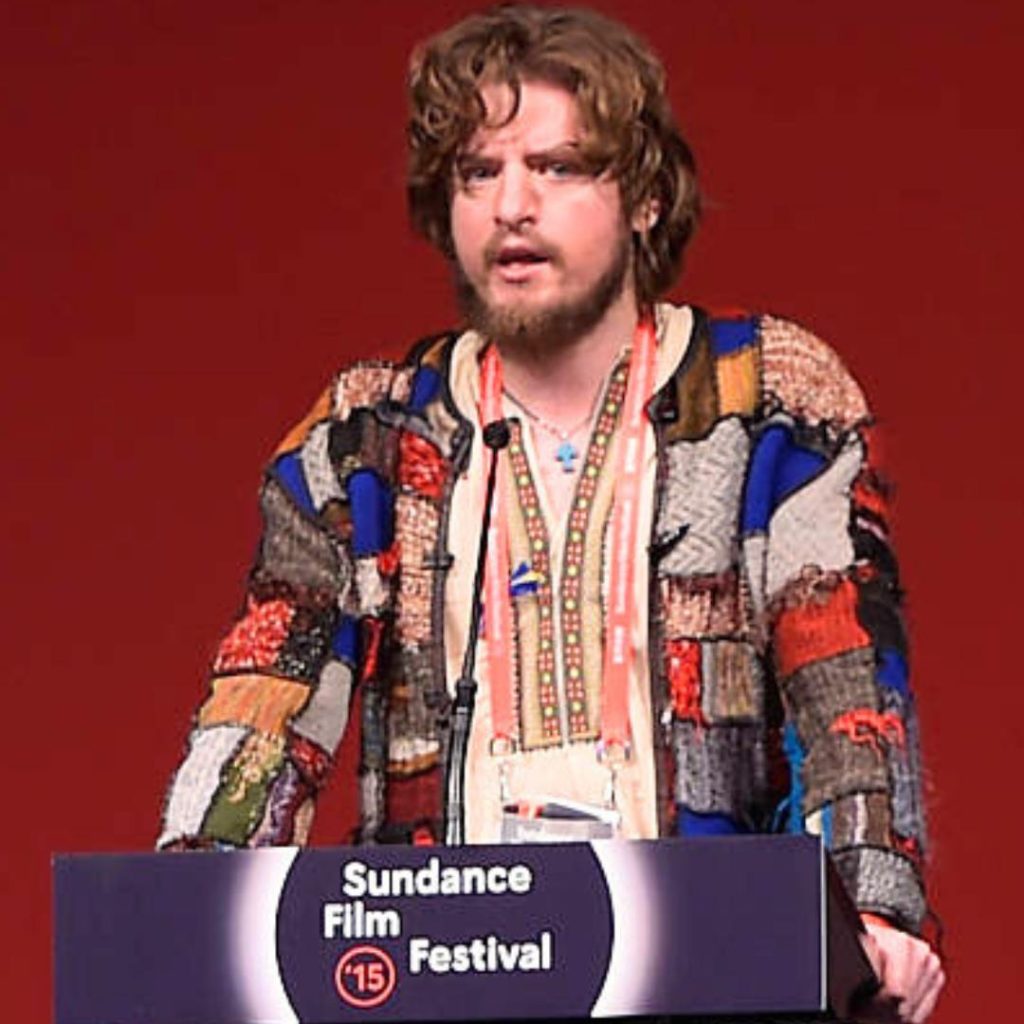
      He is a co-author of the documentary The Russian Woodpecker (2015), which received the Grand Jury Prize at the Sundance Film Festival. The film’s investigation of Chernobyl, Cold War technologies, and political mythologies remains central to his ongoing engagement with documentary cinema as a form of artistic research and social critique.

      Alongside his artistic work, Fedir has extensive experience in curatorial and organizational leadership. As Curator and Director of Tadzio Gallery in Kyiv (2018–2022), he developed exhibition programs, public talks, and interdisciplinary initiatives that connected contemporary art with social issues, activism, and community engagement. He has also worked on scenography and visual installations for public festivals and civic cultural events in Europe.

      Fedir holds an MA in Scenography and Film Scenography from the National Academy of Fine Arts and Architecture in Kyiv, where he also completed a PhD assistantship. In his current curatorial role within a civic organization, he focuses on building artistic programmes that support democratic values, critical thinking, and cultural resilience through contemporary art.

      Julia Dorokhova

        Julia Dorokhova is a Ukrainian human rights defender, lawyer, and public activist with many years of systemic experience in combating human trafficking and protecting the rights of women and vulnerable groups. For more than 20 years, she has been engaged in developing legal mechanisms for the protection of victims of sexual exploitation, violence, and modern forms of slavery.

        Julia is a recognized expert in the field of counter-trafficking and the protection of the rights of women with experience in prostitution, as well as migrant and refugee women. Her work focuses on building sustainable models of cross-sectoral cooperation between civil society and state institutions.

        A special place in her professional activity is occupied by strategic cooperation with law enforcement agencies. Yulia developed and implemented innovative mechanisms of cooperation between the police and non-governmental organizations in the field of harm reduction and protection of vulnerable communities, conducted training programs for officers of anti-trafficking units, and served as an expert on human rights compliance within the Ministry of Interior and the penitentiary system.

        She actively works with migrants and refugees, providing legal assistance to Ukrainian women abroad, including in the United Kingdom, Georgia, and Egypt. In humanitarian crisis contexts, Yulia consistently raises the issue of the lack of access to legal, social, and medical assistance for Ukrainian migrant and refugee women in Egypt, as well as the absence of support programs for Ukrainian refugee women.

        In October 2023, Julia Dorokhova spoke as a speaker at an OSCE Conference, where she presented an expert position on the protection of refugee women’s rights and combating trafficking in human beings in the context of armed conflict. She has also repeatedly spoken at platforms of the European Parliament and the European Commission, representing the interests of Ukrainian communities at the international level.

        Julia is the director of the charitable organization “All-Ukrainian League ‘Legalife'” — the first self-organization in Ukraine of people with experience in prostitution — and the author of methodological manuals on human rights and cooperation with law enforcement agencies.

        Her professional mission is to strengthen legal guarantees, promote humane public policy, and create a safe environment for women and vulnerable communities, regardless of their social status or life circumstances.

        Resilience Forum at the European Parliament

        R.I.W.E. took part in the Resilience Forum at the European Parliament (17-18 Dec. 2025, Brussels), which focused on assessing the scale and mechanisms of Russian propaganda and disinformation, as well as identifying the key vulnerabilities of European societies.

        The discussions addressed the destructive impact of Russian strategic narratives on the public consciousness of EU citizens, the need to develop political and institutional responses to strengthen the European Union’s information and cognitive resilience, and the importance of integrating Ukraine’s experience in countering information operations into broader European strategies.

        Sound of Silence – Art, Migration and the Price of Freedom

        On January 10, 2026, the interdisciplinary exhibition Sound of Silence – Art, Migration and the Price of Freedom, dedicated to the memory of Ukrainian saxophonist Yaroslav Kmitko, concluded in Varna.

        Sound of Silence – Art, Migration and the Price of Freedom

        On December 13, 2025, a memorial evening for Ukrainian saxophonist Yaroslav Kmitko and the opening of the interdisciplinary project “Sound of Silence – Art, Migration and the Price of Freedom” took place at Bulgarian National Radio in Varna (BNR – Radio Varna).

        The event was initiated by Ukrainian artist and filmmaker Fedir Alexandrovych together with Ivanna Khodos (Shkolnitskaya), founder of R.I.W.E. – Refugees International Women Empowerment, with the support of partner organizations. The evening became a space of memory, art, and public dialogue.

        R.I.W.E. co-sponsored event AI for Peace: Amplifying the voices of survivors of conflict-related sexual violence (CRSV), that marked the International Day for the Elimination of Violence against Women and the 16 Days of Activism with the theme of UNITE to End Digital Violence against all Women and Girls. The hybrid event took place on December 9th, at United Nations, Palais des Nations, Geneva and online. The event explored how ethical and human-centered AI, technology, and creative innovation can be mobilized to counter CRSV, support WPS agenda and promote peace.

        Resilient Europe: Ukraine’s Expertise in Countering Disinformation and Cultural Warfare Strengthens European Democratic Resilience

        European and Ukrainian policymakers, security experts, researchers, and civil society leaders convened in Brussels for “Resilient Europe”, a high-level forum co-organized by The Institute for Democracy and Development “PolitA” on countering Russian propaganda and disinformation, hosted at the European Parliament.

        R.I.W.E. Founder and Executive Director Ivanna Khodos (Shkolnitskaya) took part and was quoted in the press release which was published in 295 U.S. media outlets with coverage to 105.5 million people.

        “In Bulgaria, Russian disinformation is not marginal — it is systemic,” Khodos said. “Bulgaria is a member of both the EU and NATO, yet pro-Russian narratives are deeply embedded in media, political discourse, and public attitudes. Since 2022, more than 200,000 temporary protection statuses have been granted to Ukrainians, while only around 90,000–100,000 actually reside in the country. These figures are deliberately conflated to manufacture the image of ‘excessive refugees’ and to fuel social tension.”

        She emphasized that this represents a classic form of disinformation — not through outright lies, but through manipulation of facts taken out of context — amplified via social media, pseudo-news platforms, and politically legitimized actors, undermining trust in democratic institutions and European solidarity.

        Tatiana Kotlyarenko

        • LinkedIn

        Tatiana Kotlyarenko is an international award-winning expert and speaker on violence against women and girls, technology and human rights and human trafficking. She currently serves as a member of the G20 IF20 Human Trafficking Working Group. She was the Advisor on Anti-Trafficking Issues at OSCE Office for Democratic Institutions and Human Rights from 2016-2023. She worked on the 2nd edition of the National Referral Mechanisms – Joining Efforts to Protect the Rights of Trafficked Persons: A Practical Handbook and Addressing Emerging Human Trafficking Trends and Consequences of the COVID-19 Pandemic, as well as providing technical support and capacity building to combat trafficking in human beings to OSCE participating states. Tatiana was responsible for launching the OSCE International Survivors of Trafficking Advisory Council. In response to the ongoing armed conflict in Ukraine, which especially impacts women and children, Tatiana conducted rapid assessment missions and provided recommendations to countries on how to prevent and address trafficking of Ukrainian women and children.  In addition, Tatiana works on issues related to sexual violence in conflict and the intersection between violence against women and girls and security issues. She has been the recipient of the Last Girl Awards in 2022, NYC Bar 2026 Huntington Her Hero Lifetime Achievement Award, Columbia GSAS Dean’s Award for Distinguished Achievement 2026, and is a member of BMW Responsible Leaders. Tatiana is a Board Member of Generative AI for Good, Save Ukraine, Women’s Platform for Action International and a number of other NGOs.
         

        Alla Myrna

        • LinkedIn

        Alla Myrna is an international fundraising, partnerships, and communications expert with 9 years of fundraising experience and 15 years in communications and journalism. 

        She has coordinated nationwide charitable campaigns in Ukraine and led corporate, individual, and institutional fundraising for Tabletochki Charity Foundation, Caritas Ukraine, and Ukraine Aid International, working with over 500 corporate partners.

        Her campaigns have received Effie Award nominations (2019–2021), won 1st place at the SABRE Awards (2021), and were repeatedly recognized by the “Charitable Ukraine” awards (2019–2025). 

        Alla was an active member of the Caritas Europa Fundraising Working Group, selected through a competitive process among candidates from 50 countries. 

        As a member of the Advisory Council, she contributes expertise in international fundraising and strategic partnerships to advance the R.I.W.E. Foundation’s mission.

        Kopanytsia Nadiia Mykolaivna

        • Facebook
        • LinkedIn

        All-Ukrainian Association of Management Consultants, Member of the Commission on Professional Ethics.

        USP (Ukrainian Union of Psychologists). Field: art therapy.

        National Association of Facilitators of Ukraine. Member. 

        Founder of the School of Engagement Technologies (facilitation tools)

        Author of the programme ‘People’s Psychologist’ (mental health leadership)

        Main position:

        Director of the NGO ‘TRAINERS’ ASSOCIATION OF UKRAINE

        Psychologist, coach, supervisor.

        Management consultant (SMS, ICMCI). 

        • Certified trainer (TAU – Ukrainian Coaching Association)
        • Certified corporate trainer (ARB PRO – St. Petersburg Training Institute)
        • Certified organisational coach and supervisor. Ukrainian branch of the European Association of Coaches (ANCE), head and lead trainer Elizabeth Alder (Vienna).
        • Certified ART therapist. Edinburgh programme (head Margret Zade)
        • Certified TOP Master facilitator.
        • Certified Scrum Master.
        • Certified Pinpoint facilitator. 
        • Certified Visual Thinking trainer.
        • Certified andragog (adult education). DVV International

        Irina Mirochnik

        • Facebook
        • WordPress

        PhD, President of the Flexible Packaging Association of Ukraine and representative of the SAVE FOOD initiative UN in Ukraine, Member of the Supervisory Board of the Jewish Confederation of Ukraine, Board Member of the Ukrainian League of Industrialists and Entrepreneurs, included in the list of 100 Business Ambassadors of Ukraine, 100 most influential women of Ukraine and is in the top 100 most successful women of Ukraine.

        Further links:

        Strategy Council – https://strategy-council.com/en/speakers/220  

        Global FDI Reports –http://ukraine.globalfdireports.com/interview/irina-mirochnik

        Iryna Kopanytsia

        • LinkedIn

        Iryna Kopanytsia is a women’s rights advocate, humanitarian leader, and Government Relations and advocacy specialist. Since the beginning of Russia’s full-scale invasion in 2022, she has been fully engaged in war-related initiatives, including cyber volunteering, international advocacy, protection of women’s rights, and psychological rehabilitation of displaced persons and war-affected communities.

        Until 2023, she served as CEO of White Ribbon Ukraine, part of a global movement active in more than 96 countries. She has been a member of the campaign’s Advisory Board since 2017. She contributed to national advocacy efforts that led to the criminalization of domestic violence in Ukraine and to the development of cooperation with members of the European Parliament and the U.S. Senate. Under her leadership, White Ribbon Ukraine launched the first mobile application in Ukraine for survivors of domestic violence, supported by the U.S. Embassy and the State Democracy Fund.

        Iryna holds a Bachelor’s degree in Organizational Management and completed MBA training at ESSEC Business School (Singapore). Since 2013, she has worked in Government Relations and lobbying in Ukraine, the United States, and the United Kingdom. Her experience includes political campaign management and international communications at Bell Pottinger (London). As part of the International Government Affairs Professionals Association (IGAPA), she initiated and participated in international GR and advocacy forums and conferences in Washington, Brussels, Dubai, Istanbul, and Kyiv.

        Together with her mother, a psychologist, she runs rehabilitation groups for internally displaced persons and victims of war crimes from Mariupol, Bakhmut, and Enerhodar. Her team prepared a large-scale OSINT report for the U.S. Congress on the abduction of Ukrainian children and initiated international platforms on veteran policy, rehabilitation, and social reintegration.

        She is co-owner of the NGO “Ukrainian Coaches Association,” co-founder of HYNTEGRA ODV (Italy), and co-founder of LLC “Wolves Defense” (Ukraine). She also serves on the Advisory Board of Valicor (USA), an AI-based military mental health technology company.

        Expertise: women’s rights, anti-violence policy, advocacy and lobbying, international cooperation, humanitarian response, psychological rehabilitation.

        Veronica Zeitlin 

        • LinkedIn

        Veronica Zeitlin is a lawyer and international human rights expert with over 20 years of experience preventing and responding to sexual and gender-based violence and forced labor, bringing perpetrators to justice, and supporting survivors through trauma-informed approaches.

        She currently works as a consultant and formerly served as Chief of Research and Policy at the U.S. Department of Labor’s Office of Child Labor, Forced Labor, and Human Trafficking. There, she engaged with diverse global stakeholders to protect vulnerable populations from exploitation and led the development of the Department’s flagship reports: Findings on the Worst Forms of Child Labor and the List of Goods Produced by Child or Forced Labor.

        Previously, Ms. Zeitlin was a Senior Advisor on Counter-Trafficking in Persons (C-TIP), Gender, and Migration at USAID, where she coordinated sex trafficking and forced labor programs across five global regions, ensuring application of global best practices. She also led the development and implementation of USAID’s first agency-wide C-TIP Policy, strengthening Agency alignment and impact.

        She also served as a Political Affairs Analyst at the U.S. Department of State’s Office to Monitor and Combat Trafficking in Persons, where she conducted human trafficking assessments and contributed over 100 country narratives to the annual Trafficking in Persons Report.

        Ms. Zeitlin holds a J.D. from the University of  Virginia School of Law and a B.A. in Anthropology and Spanish Literature from Columbia University.

        Doreen Beatrice

        Treasurer, R.I.W.E.

        • LinkedIn

        Over the past several years, Doreen Beatrice has worked with various non-governmental organizations to promote human rights. Her efforts have focused on combatting gender-based violence, child abuse, and human trafficking.

        Doreen’s academic journey began as a young student studying abroad in Japan for two years. During her studies, she completed an internship with the Washington Center at the U.S. Information Agency Far East division. She then graduated with honors from Seton Hall University, earning a Bachelor of Arts in International Studies with a focus on Asia.

        In 2025, Doreen attended the summer program at American University’s College of Law, where she studied International Human Rights Law. She earned certifications in four courses: International Justice for Human Rights Violations, Women & International Human Rights Law, International Humanitarian Law, and United Nations Human Rights Systems. Additionally, Doreen holds certifications from organizations such as Human Trafficking of Ohio, Stewards of Children, and Trucker’s Against Trafficking.

        Doreen is an active member of several organizations, including Women Graduates – USA and International, Women Wage Peace, and Kentucky Colonels. She serves on the board of the Robert G. Laughlin Trust for The Nature Conservancy Atlantic Rain Forest in Brazil. She is also a donor to Vital Voices, Shared Hope International, and Holly Hill Child and Family Solutions.

        Currently, Doreen works as Trustee of The Robert S Brown Trust. She has over thirty years of experience owning and operating businesses. In addition to her professional endeavors, she was a Professional International Ballroom Dance Competitor and continues to work as a Professional Ballroom Dance Coach. shape policies that affect their lives.

        Ivanna Khodos (Shkolnitskaya)

        • LinkedIn

        Founder and Executive Director, R.I.W.E.

        Ivanna Khodos (Shkolnitskaya) is a Ukrainian human-rights and gender-policy expert specialising in refugee rights, gender equality, prevention of gender-based violence and human trafficking, and mental health. After her displacement to Bulgaria in 2023 with her three children, she became deeply involved in protecting the rights of Ukrainian refugees across the country.

        With more than ten years of experience in public policy and human rights, her professional background includes the reform department of Ukraine’s Prosecutor General’s Office and senior roles within the Ministry of Justice, where she worked with UN Women, the Council of Europe, OSCE, La Strada Ukraine and UNODC on gender policy, penitentiary reform and violence prevention. She later led White Ribbon Ukraine and served as an analyst and project lead at the Office of the Educational Ombudsman of Ukraine.

        Ivanna is the Founder and Executive Director of R.I.W.E. – Refugees International Women Empowerment, a refugee-women-led organisation based in Varna, Bulgaria, focused on advocacy, monitoring and policy research on the rights of Ukrainian women under temporary protection. In 2025, she served as an Ambassador of the New Women Connectors (NWC), leading a cross-border initiative on the prevention of trafficking and gender-based violence. She is also an advisor to the Representative of the Ukrainian Parliament Commissioner for Human Rights on the protection of Ukrainians abroad.

        Ivanna is trained in refugee leadership and international protection frameworks through the Geneva Advocacy Training for Refugee Leaders (ExCom-specific, IIHL Sanremo), and has completed specialised programmes on GBV, THB and victim-centred approaches, including Sida ITP GBV (Swedish Police Authority, Kvinna till Kvinna, OSCE) and the OSCE/ODIHR workshop on technology-facilitated trafficking. She holds master’s degrees in law and psychology.